
A Porsche Technician’s First Swiss Watch
There are watches you buy because you’ve always wanted them. Then there are watches that seem to find you at exactly the right moment. This Tissot Heritage 1973 Chronograph was the latter.
For Daniel, this was not simply the purchase of a first Swiss watch. It was the beginning of understanding an entirely different category of machine — one that shares far more DNA with classic Porsche engineering than most people realize.
And fittingly, the sourcing story started the same way many good automotive stories do: through conversation, trust, and shared obsession.
The Brief
Daniel, owner of 944 Safari, is a Porsche technical specialist. The kind of person who understands systems deeply. Rebuilds instead of replaces. Appreciates serviceability. Notices tolerances. Values mechanical honesty.
So when the conversation about a first Swiss watch started, the goal was never to simply “get a luxury watch.”
The goal was to find something that:
had legitimate mechanical substance
carried motorsport history
offered real value
could be worn daily
rewarded understanding over status
That immediately narrowed the field. Many modern watches today are beautifully marketed but emotionally hollow. Others are technically impressive but disconnected from any real identity.
The Heritage 1973 landed directly in the sweet spot.
Why This Watch Made Sense
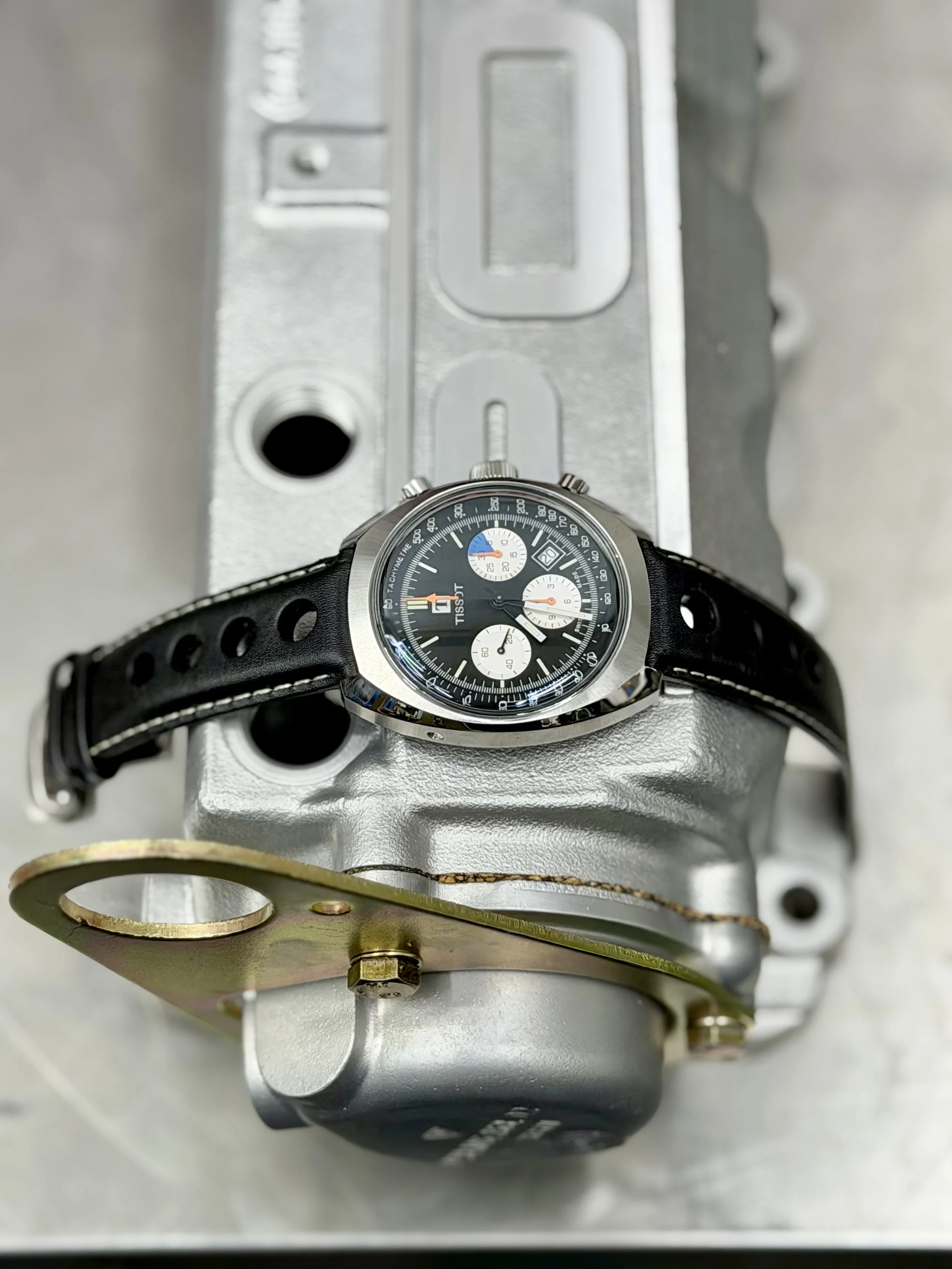
The Heritage 1973 is rooted in Tissot’s actual racing history and inspired by the brand’s 1970s Navigator chronographs.
More importantly, it feels like a proper instrument.
The cushion-style case, tachymeter scale, panda-inspired chronograph layout, perforated racing strap, and mechanical chronograph movement all communicate the same thing:
This watch was designed around motorsport timing culture first, fashion second.
Inside is the A05.H31 automatic chronograph movement, derived from the respected Valjoux 7753 architecture. For someone who lives in the world of Porsche drivetrains and mechanical systems, that mattered.
This is not a disposable movement. It is a platform with lineage. The same way enthusiasts respect:
Mezger engines
transaxle cars
air-cooled flat sixes
proven gearbox architectures
Watch enthusiasts respect the Valjoux chronograph family for similar reasons:
durability
serviceability
history
real-world usability
The Moment It Clicked
Once the watch arrived, the reaction was immediate. Not because of hype or branding, but because of feel.
The weight.
The pushers.
The rotor movement.
The dial depth.
The mechanical reset of the chronograph hands.
The recessed date corrector inherited from the 7753 architecture.
Every interaction reminded him: this object is alive mechanically.
And for someone already fluent in analog systems through Porsche work, the transition felt surprisingly natural. Different machine. Same philosophy.
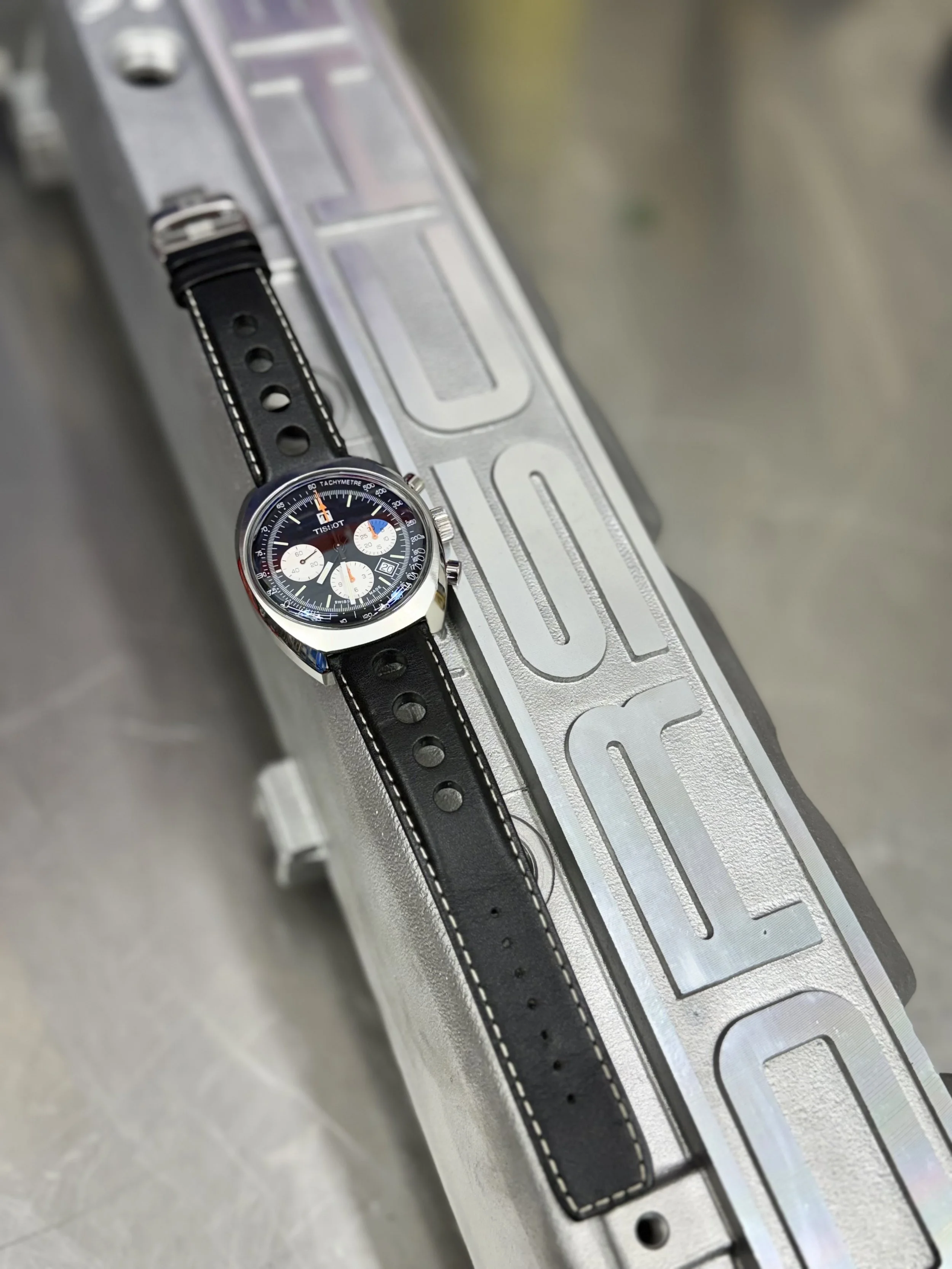
More Than a First Watch
The funny thing about a first serious mechanical watch is that it changes how you look at objects.
You stop asking:
“What does it cost?”
And start asking:
“How was this built?”
“Why was it engineered this way?”
“What survives long-term?”
“What deserves to be maintained instead of discarded?”
That mindset is already familiar to anyone who restores cars properly. The Heritage 1973 simply translated that philosophy onto the wrist. And honestly, that is why this watch made so much sense for Daniel.
Not because it was flashy. Because it was legitimate.
Final Thoughts
A first Swiss watch should teach you something about mechanics, design, history, and yourself. The Tissot Heritage 1973 Chronograph does all of that exceptionally well. Especially for someone whose life already revolves around understanding machines properly.
Some watches impress you immediately. Others slowly earn your respect.
The good ones do both.
