
Vol. 29: Tissot Heritage 1973 × 1974 BMW 3.0 CS
Before the CSL went full homologation hero, there was the CS.
The 3.0 CS is the refined grand touring version of BMW’s E9 coupe — long hood, pillarless side glass, delicate chrome trim, and proportions that still feel correct fifty years later.
Underneath the elegance sits a 3.0-liter M30 inline-six, smooth and torque-rich, paired most commonly with a 4-speed manual. It’s not a brute-force car. It’s balanced. Linear. Mechanical in a way modern cars rarely are.
The CS doesn’t try to look like a race car. But it shares the same DNA.
It’s the road-going expression of the platform that would later dominate touring car grids. Less stripped. More composed. Still deeply connected to driver and machine.
The Car: 1974 BMW 3.0 CS (E9)
Before the CSL went full homologation hero, there was the CS.
The 3.0 CS is the refined grand touring version of BMW’s E9 coupe — long hood, pillarless side glass, delicate chrome trim, and proportions that still feel correct fifty years later.
Underneath the elegance sits a 3.0-liter M30 inline-six, smooth and torque-rich, paired most commonly with a 4-speed manual. It’s not a brute-force car. It’s balanced. Linear. Mechanical in a way modern cars rarely are.
The CS doesn’t try to look like a race car. But it shares the same DNA. It’s the road-going expression of the platform that would later dominate touring car grids. Less stripped. More composed. Still deeply connected to driver and machine.
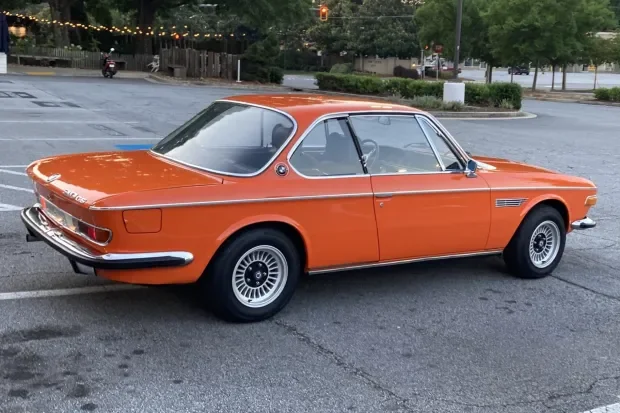
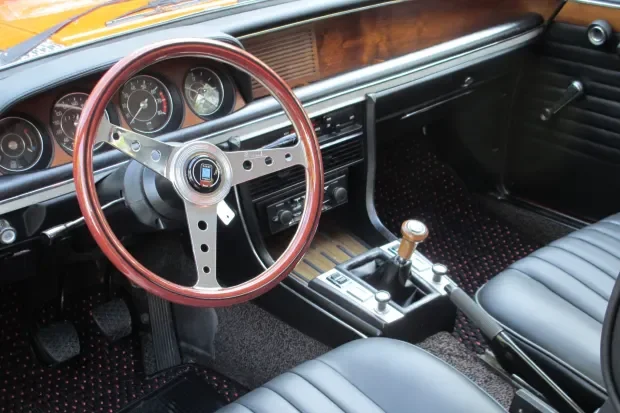
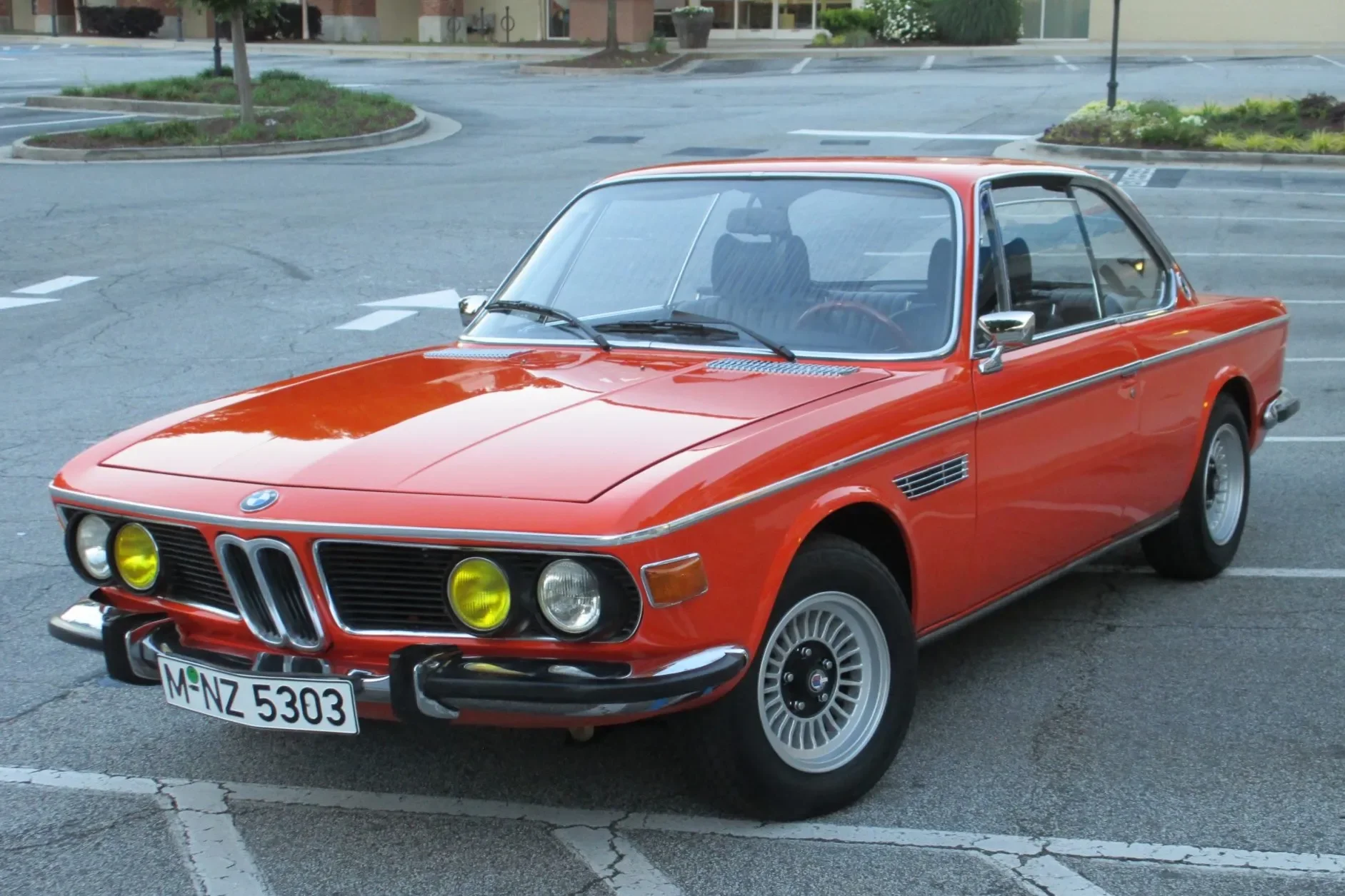
1974 BMW 3.0 CS — Key Specs
Chassis: E9 coupe
Engine: 3.0L M30 inline-six
Output: ~180 hp (US-spec)
Transmission: 4-speed manual (most desirable)
Layout: Front-engine, rear-wheel drive
Character: Grand touring balance with touring car roots
The Watch - Tissot Heritage 1973
The Heritage 1973 pulls directly from Tissot’s late-1960s and early-1970s chronographs — the era when wrist timing was still a working instrument, not a lifestyle accessory.
The cushion case gives it presence, but the dial remains functional and legible. The contrasting subdials feel lifted from a pit timing sheet. The perforated leather strap reinforces the racing lineage without overplaying it.
Inside is a Valjoux 7753 architecture — a cam-driven automatic chronograph movement known for durability and serviceability. It’s not delicate haute horology. It’s a mechanical tool built to be used, regulated, and maintained.
Just like the BMW’s inline-six.
Both rely on robust engineering over complexity for its own sake.
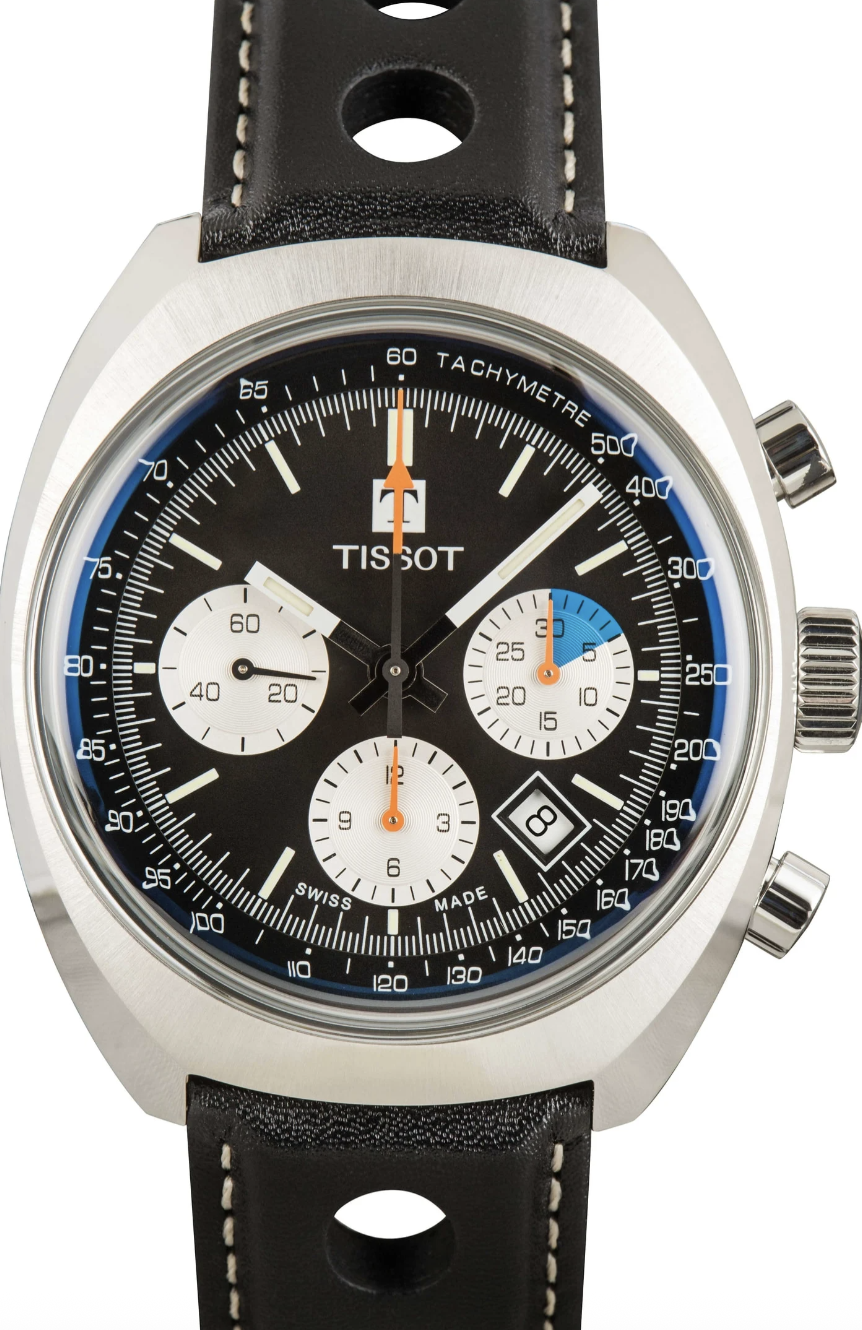
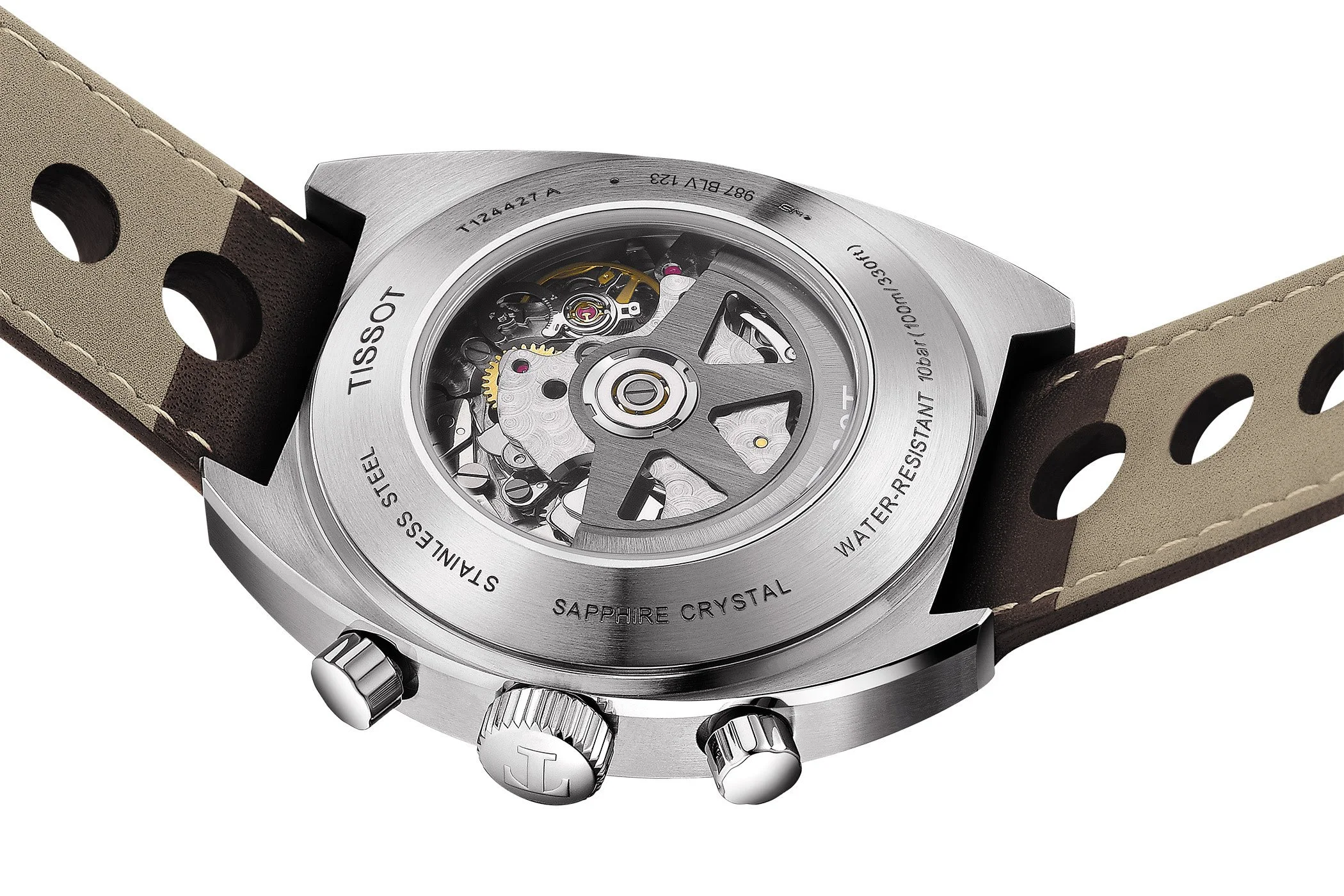
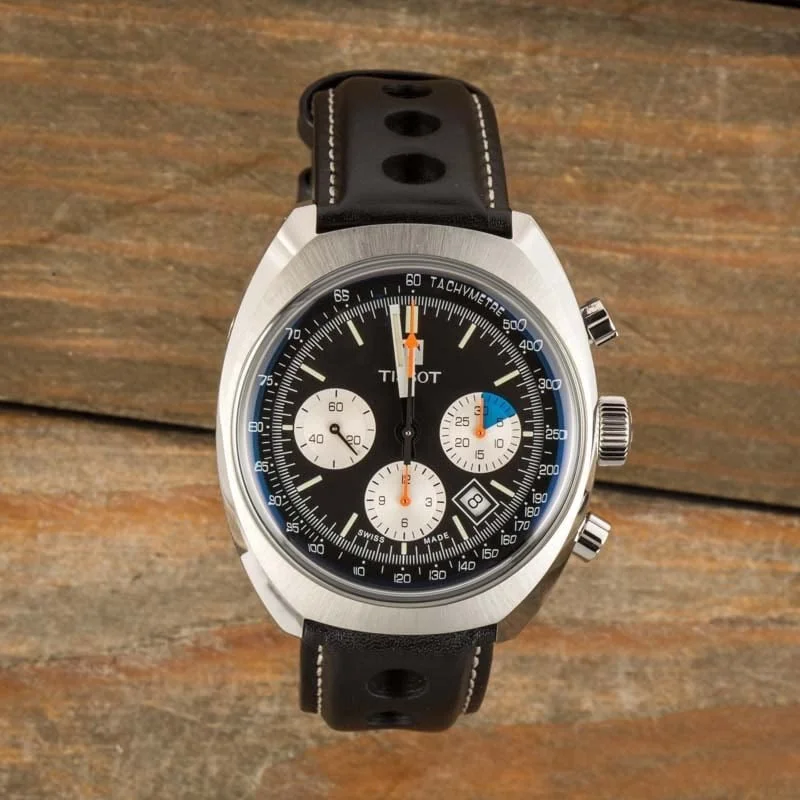
Core Specs — Heritage 1973
43mm stainless steel cushion case
Domed sapphire crystal
Automatic A05.H31 (7753 architecture)
60-hour power reserve
Tri-compax chronograph layout
100m water resistance
Why This Pairing Works
The 3.0 CS is about restraint.
So is the Tissot. Neither chases spectacle. Both lean into proportion and usability.
The BMW expresses performance through balance — weight distribution, chassis tuning, steering feel. The Tissot expresses it through legibility and mechanical honesty — pushers with tactile feedback, a chronograph layout that prioritizes clarity, a movement platform that has proven itself for decades.
There’s no unnecessary excess here. Just mechanical intention.
And that’s what makes this pairing stronger than the obvious CSL choice. The CS reflects how most enthusiasts actually live with their machines — driven, maintained, appreciated — not preserved as museum-grade race artifacts.
This is the version of 1970s performance you could daily. And time properly.
