
Vol. 24: Rolex Explorer 1016 × 1976 Toyota Land Cruiser FJ40
Some machines don’t age. They settle.
They arrive at a point where nothing meaningful needs to be added—only protected. Where refinement no longer means complexity, and progress looks more like restraint.
The Rolex Explorer 1016 and the 1976 Toyota Land Cruiser FJ40 live squarely in that space. Not because they are old, but because they were built at the moment their makers stopped experimenting and started getting it right.
This is what Wrist & Wheel calls the sweet spot.
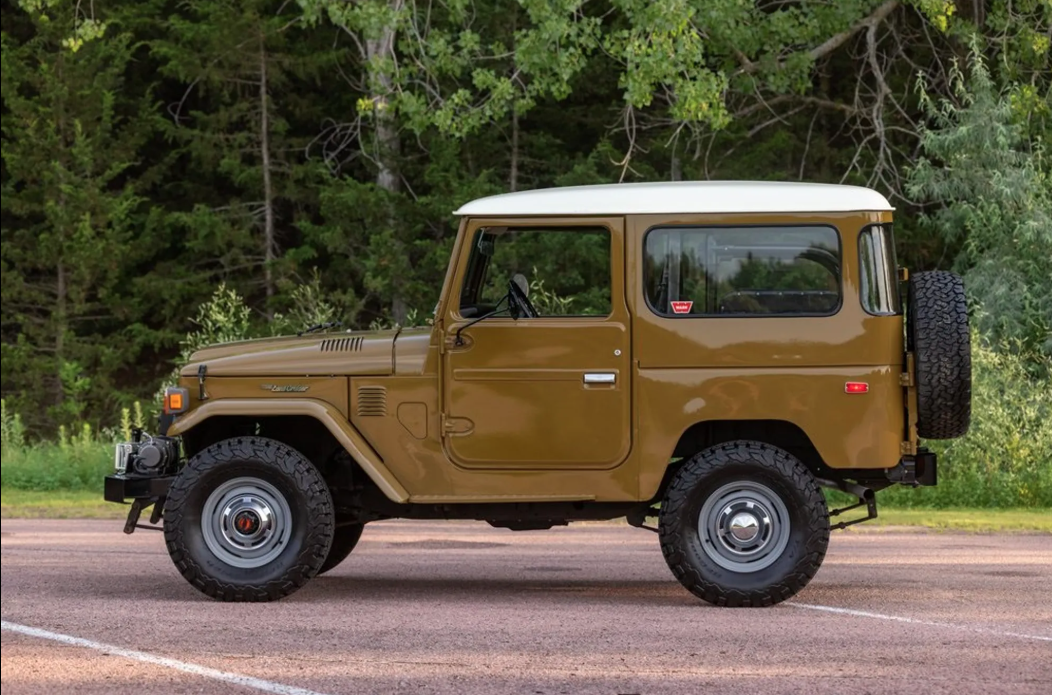
The Machine: 1976 Toyota Land Cruiser FJ40
By 1976, the Land Cruiser had already earned its reputation the hard way. Remote terrain, bad roads, worse conditions. The FJ40 wasn’t designed to impress—it was designed to return.
Toyota Land Cruiser FJ40 – Specs
Year: 1976
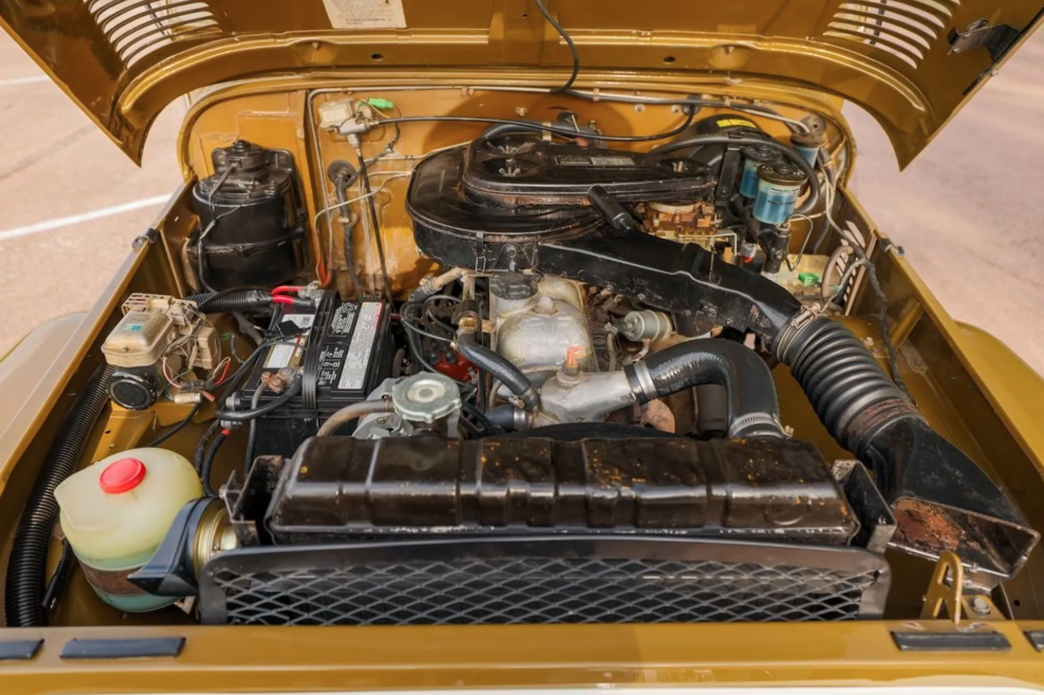
Engine: 4.2-liter inline-six (Toyota 2F)
Output: ~135 hp / ~210 lb-ft
Transmission: 4-speed manual
Drivetrain: Part-time 4WD, solid axles front and rear
Curb Weight: ~3,600 lbs
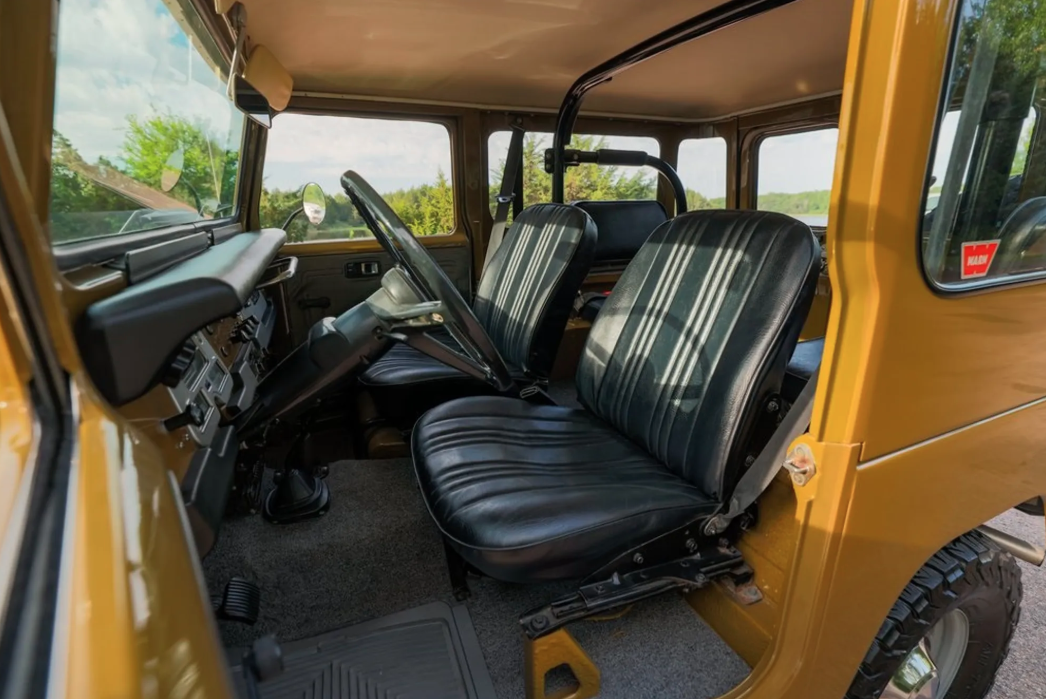
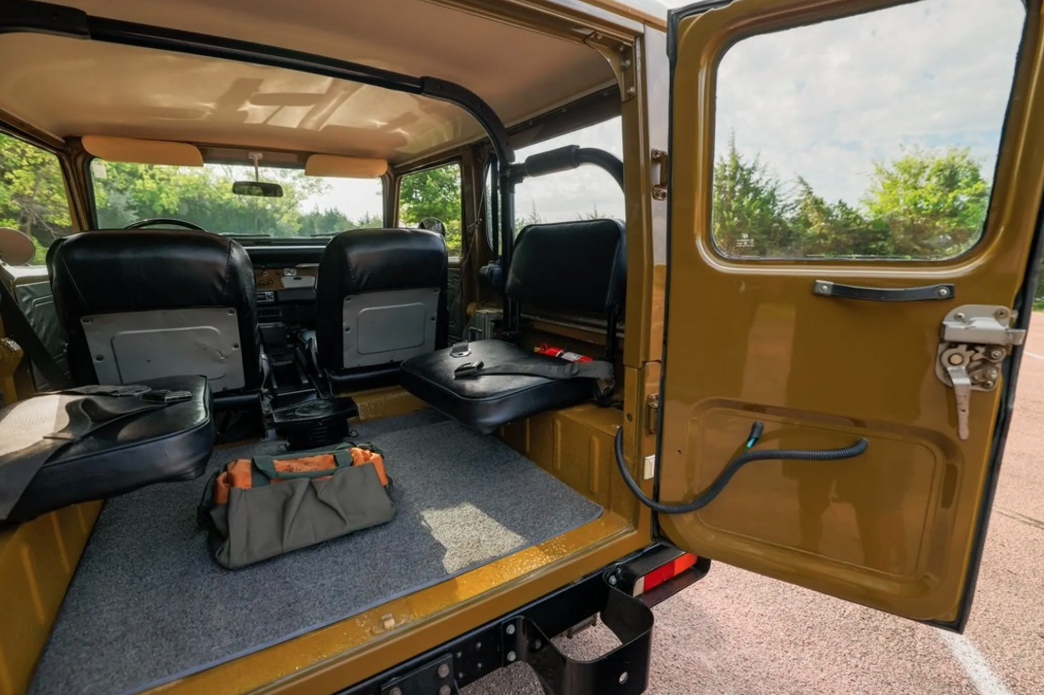
Construction: Body-on-frame, leaf springs, mechanical systems throughout
No traction control. No drive modes. No insulation between you and the work. Just steel, torque, and mechanical honesty. You don’t drive an FJ40—you negotiate with it.
Why 1976 Matters
On paper, 1976 looks like a footnote: the first year Toyota fitted front disc brakes to the Land Cruiser. In reality, it changed everything. That single update marked the moment the FJ40 crossed from purely agricultural into something you could live with—without sacrificing the off-road soul that made it legendary.
Before ’76: romantic, capable, but unforgiving. After ’76: still mechanical, still honest—now survivable. The sweet spot.
The heart of it all is the 2F engine. It wasn’t built for speed or numbers. It was built to survive load, neglect, heat, cold, dust, and bad fuel. Low-RPM torque. Overbuilt internals. Long service intervals measured in decades, not miles.
Not fast. Not flashy. Just impossible to kill.
The Watch That Belongs There: Rolex Explorer 1016
The Explorer 1016 occupies the same philosophical ground as the ’76 Land Cruiser.
No date. No rotating bezel. No complications asking for attention.
Just time—legible, durable, and quietly confident.
The Explorer lineage was born in the aftermath of Everest, where early prototypes were worn by climbers operating under conditions where failure wasn’t theoretical. When the model entered regular production, Rolex resisted the urge to decorate it. From the late 1960s forward, the Explorer remained almost unchanged—a rare admission from a brand known for iteration.
That restraint is the point.
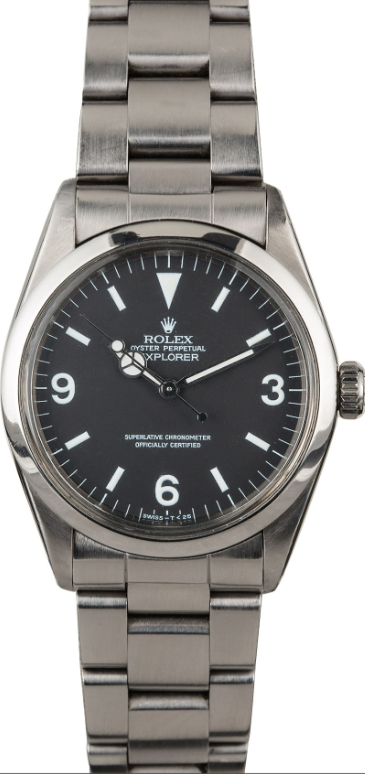
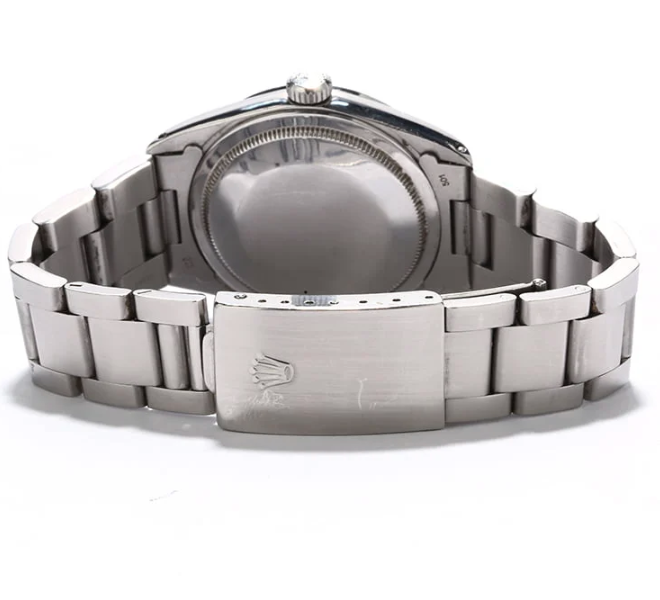
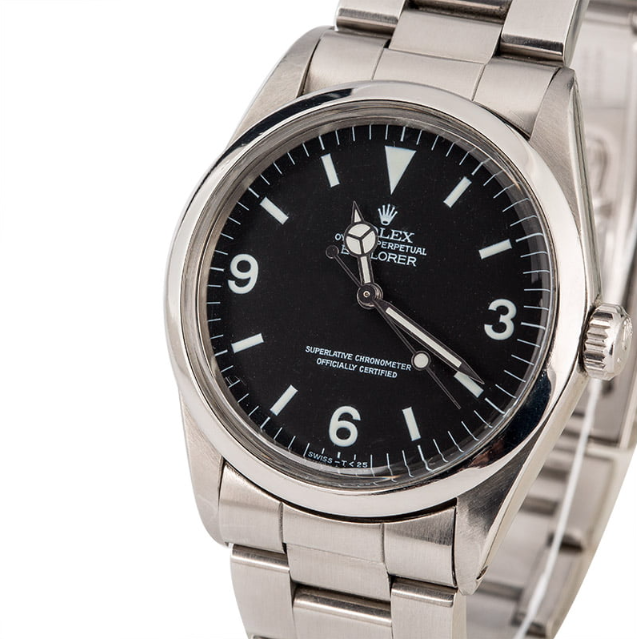
Rolex Explorer 1016 Specs
Production: Late 1950s to late 1980s
Case: 36mm stainless steel
Crystal: Domed acrylic (many service replacements flatter)
Crown: Twinlock, signed coronet
Water Resistance: 100 meters / 330 feet
Dial Details
Black glossy or matte variants
Oversized 3 / 6 / 9 numerals
Stick hour markers
Inverted triangle at 12
Mercedes-style hands
Movement
Rolex Caliber 1560 or 1570
Automatic
Time-only
Built for long-term reliability
No crown guards. Slender lugs. Nothing unnecessary.
Inside, the Caliber 1570 mirrors the Land Cruiser’s 2F engine in spirit. Not quick. Not clever. Just engineered to keep working long after most alternatives would quit.
Shared Philosophy
The Land Cruiser didn’t need more horsepower. The Explorer didn’t need more complications. Both needed trust.
1976 represents the moment Toyota refined the FJ40 without diluting it. The 1016 represents the moment Rolex perfected the Explorer without modernizing it out of character.
These are machines built for people who measure success by return, not arrival.
No more proving. Just performing.
Wrist & Wheel
We don’t chase new. We chase the moment a machine becomes right.
The 1976 Toyota Land Cruiser FJ40 and the Rolex Explorer 1016 aren’t vintage because they’re old. They’re vintage because they’ve already answered the only question that matters:
Will it get me back?
In a world engineered for convenience, that kind of honesty still feels radical.
